Siding Installation and Replacement in Guelph
Vinyl, insulated vinyl, fibre cement and engineered wood, board and batten, plus soffit, fascia and exterior trim — across Guelph and Wellington County. Full elevations, single walls, gable ends and rear additions. You get a written quote with the trim details listed, not a square-foot number and a handshake.
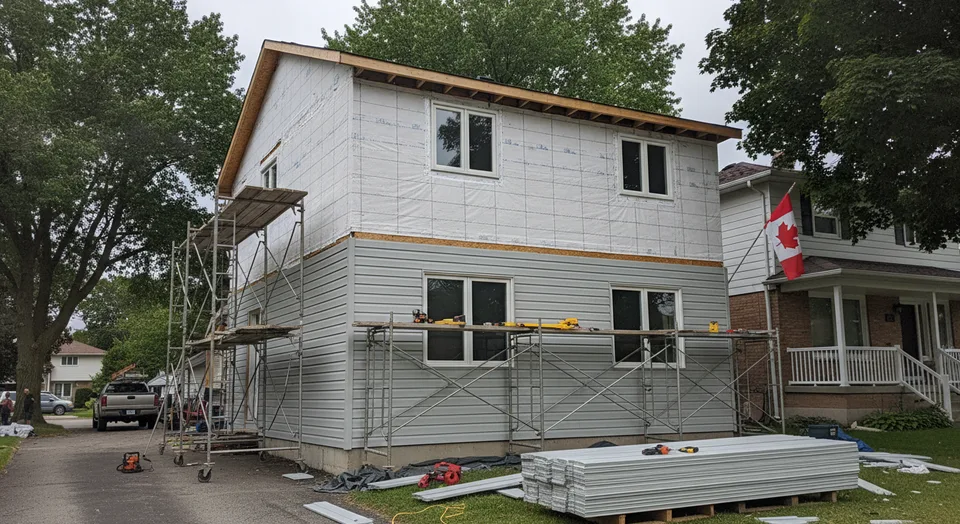
Guelph's exterior stock splits three ways, and which one you own decides almost everything about the quote. The limestone and brick century homes downtown, in The Ward, Old University and around Exhibition Park are usually not full-siding jobs at all — the siding on those houses is gable ends, dormer cheeks, porch soffits and rear additions, and all of it has to terminate correctly against original masonry. The post-war and 1960s-70s west and north end is the real replacement market: original aluminum siding that has chalked and faded, dented along the walk-out side, with soffit and fascia that were undersized when they went on and have been patched since. The newer south end — Westminster Woods, Clairfields, Pine Ridge, Grange Hill East — is builder-grade vinyl that is now old enough to crack, warp and let go in a windstorm, where the job is usually matching or replacing one or two elevations rather than the whole house. Out in Wellington County, farmhouses and outbuildings through Rockwood, Fergus, Elora, Puslinch, Aberfoyle, Ariss and Eden Mills bring board and batten, long uninterrupted walls and structures that were never square. Running underneath all of it is Ontario weather. Freeze-thaw cycling, ice, wind-driven rain and summer UV are what age a wall here, and siding is the layer keeping water off the sheathing rather than a finish sitting on top of it. This is the booking line for a vetted Guelph siding contractor. The first visit is a look at the actual wall. Nothing gets quoted off a photograph and nothing gets ordered before you have signed a number.
Siding Work We Take On
Vinyl and insulated vinyl, fibre cement and engineered wood, board and batten and vertical siding, soffit, fascia and trim, and repair after storm or impact damage — across Guelph and Wellington County. Siding and the trim that goes with it.
Vinyl & Insulated Siding
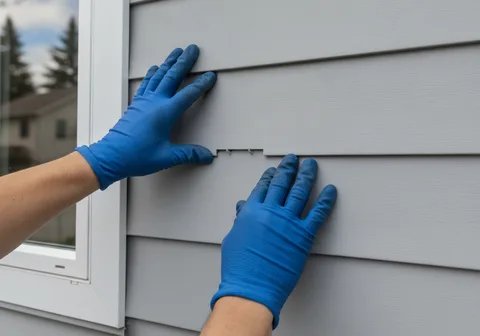
Full house re-clads and single elevations in vinyl or insulated vinyl panel, hung so it can move, with the trim, corners and flashing details priced as part of the job rather than added afterwards.
Learn more →
Fibre Cement & Engineered Wood
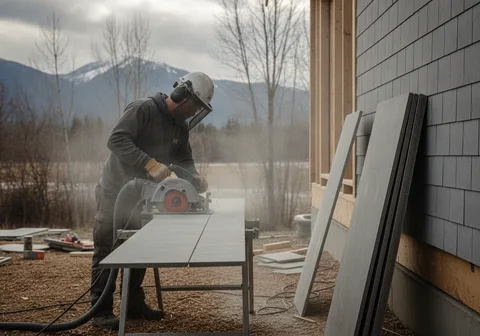
Fibre cement and engineered wood plank and panel — the heavier, painted materials people ask for by brand name — installed with the fastening, flashing and cut-edge discipline they need.
Learn more →
Board & Batten and Vertical Siding
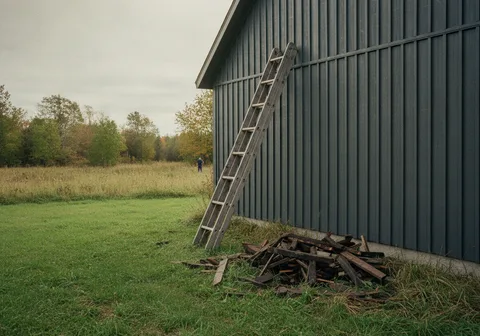
Vertical cladding done as a layout job rather than a panel job — battens spaced deliberately, terminations detailed, and the water handled where vertical siding is weakest.
Learn more →
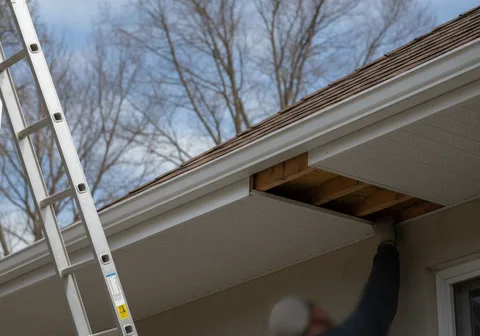
Soffit, Fascia & Trim
Vented soffit, fascia, corner boards, frieze, and window and door trim — installed with the siding because that is the only time the whole detail is accessible.
Learn more →
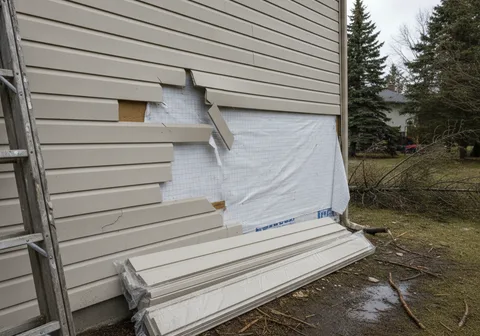
Siding Repair & Storm Damage
Blown-off panels, cracked vinyl, hail and impact damage, and the leaks that show up as an interior stain — assessed properly, matched where matching is possible, and told straight when it is not.
Learn more →
Siding in Guelph: What You Are Actually Working With
Century homes downtown, The Ward, Old University and Exhibition Park. Most of these houses are limestone, brick or a mix, and the honest answer for the majority of them is that they should not be sided. The masonry is the reason the house looks the way it does and covering it is both expensive and a mistake. What these houses actually need is siding in the specific places they already have it: gable ends above the brick, dormer cheeks and dormer faces, porch ceilings and porch skirting, bay returns, and rear additions that were built later out of frame rather than stone. Those are small areas and they are disproportionately fiddly. Every one of them ends at a masonry line, and that junction is where the work either holds water out or lets it in. A gable end that dies into brick needs the flashing lapped in the right order and the siding held off the masonry so it can drain and dry, not caulked tight to it. The same is true where a frame addition meets the original back wall of the house. Get that detail wrong and the failure does not show up on the siding at all — it shows up years later as soft sheathing or a stain on an interior wall. The other recurring item down here is the porch. Century porch ceilings and skirting take weather from underneath as well as above, the original material is usually wood that has been painted many times, and the columns and beam ends often want attention at the same time. That is a carpentry job with siding attached, and it should be quoted that way rather than as so many square feet of panel.
The west and north end: original aluminum and the real replacement market. Willow West, Parkwood Gardens, Onward Willow, West Willow Woods, Waverley, Riverside Park and the streets off Victoria Road North are mostly 1950s through 1980s bungalows, backsplits and two-storeys, and a large share of them are still wearing the aluminum siding they were built or re-clad with. That siding has done well to last this long, which is worth saying plainly. What it is doing now is the predictable end of its life: the finish has chalked, so a hand comes off the wall grey; the colour has gone flat and uneven, worse on the south and west walls that take the most sun; and it is dented wherever a ladder, a ball or a snowblower has touched it. Aluminum dents and stays dented. Underneath that, two things matter more than the panels. The first is what is behind them. A lot of these walls have little or no insulation in the cavity and no continuous layer on the outside, which is why re-siding here is one of the few times it is genuinely worth talking about insulated panel or a foam layer under the siding while the wall is open. The second is the soffit and fascia. On houses of this era the overhang is often shallow, the fascia board behind the metal has taken water at the low corners, and the soffit has been cut into and patched over the years. That gets looked at properly when the siding comes off, because it is the only time anyone will see it. These are also the houses where the walls are honest to work on: straightforward rectangles, few dormers, and enough space around most of them to work safely. That keeps the labour side of the quote sensible.
The south end: builder vinyl, old enough to fail. Westminster Woods, Clairfields, Pine Ridge, Grange Hill East, Kortright Hills and the subdivisions off Gordon are full of houses under about twenty years old clad in builder-grade vinyl. The wall assembly behind it is usually modern and fine. The panels are what have aged. Three failures come up over and over out here. Cracking, which happens when a panel takes an impact in cold weather — vinyl is brittle below freezing and a hockey puck or a ladder foot in February does what it would never do in July. Warping and rippling, usually on the walls that get the hardest afternoon sun, and frequently made worse by a panel that was nailed tight instead of left to move. And panels blown off in wind, which is almost always a locking or fastening problem rather than a material problem. The awkward part of south-end work is matching. Vinyl colours are discontinued constantly, and even the same colour name fades differently after fifteen years of sun. A repair on a front elevation that has to be invisible is a different conversation from a repair on a side wall nobody sees. Sometimes the right answer is pulling panels from a hidden elevation to patch a visible one and re-cladding the hidden wall in the closest current match. Sometimes it is doing one full elevation. We will tell you which, and we will tell you when a perfect match is not available rather than promising one and delivering close-enough.
Rural Wellington County: farmhouses, board and batten, and outbuildings. Rockwood, Eden Mills, Ariss, Fergus, Elora, Puslinch and Aberfoyle bring a different job again. Farmhouses have long uninterrupted wall runs, often two full storeys with no break, and they are frequently nowhere near plumb or square after a century of settling on a stone foundation. Board and batten is common here and is often the right material to put back, because it suits the building and it handles a wall that is not perfectly flat better than a tight horizontal lap does. Outbuildings are part of the conversation more often than not — drive sheds, garages, workshops and barns where the brief is durability rather than appearance, and where a steel or a simple vertical cladding beats anything decorative. Those are worth quoting at the same time as the house because the mobilisation is already paid for. Two practical realities out here. Exposure is worse: a farmhouse standing alone in open country takes wind and driven rain from every direction with nothing to break it, and the fastening schedule and the trim details have to respect that. And access can be the largest single variable in the quote — a two-and-a-half storey gable end over a slope, with no room for a lift, is a scaffolding job before it is a siding job. Travel out to the county is built into the quote up front rather than added afterwards.
How the booking works, and what we ask you. You call or send the form. Useful details: your neighbourhood, roughly when the house was built, what is on it now — aluminum, vinyl, wood, stucco, brick with sided gables — how many storeys, whether you are looking at the whole house or one wall, and whether something has already failed or is leaking. Photos help: one of each elevation from far enough back to see the whole wall, plus a close-up of anything damaged and one of the soffit at a corner. Then someone comes and looks at it properly. That visit covers the condition of what is on there now, what is likely behind it, the state of the fascia and soffit, the window and door openings and how they are currently trimmed, the corners and terminations, the roof-to-wall junctions, and the access. You get a written quote with the trim work broken out as its own line rather than buried, a material and colour confirmed in writing, and a straight answer about the season. Siding is weather-dependent work. Vinyl gets brittle and awkward to cut cleanly in deep cold, fibre cement and wood do not want to be installed and painted in the wet, and a wall that is opened up should not sit open through a January storm. We would rather tell you the realistic window than take a deposit and leave you guessing.
Serving Guelph & Surrounding Areas
Siding is part of the building envelope, and how a wall sheds and drains water is governed by Ontario's Building Code. Whether a particular re-cladding job needs a building permit depends on what is being changed and where, and that is a question for the City of Guelph inside the city or your township office outside it — heritage designation, conservation district rules and zoning setbacks can all apply to what goes on the outside of a house. Trade qualifications in Ontario are administered by Skilled Trades Ontario, and anyone working at height on your house should be able to show current WSIB coverage and liability insurance before they set a ladder up. Before you sign an exterior renovation contract, Consumer Protection Ontario sets out your rights and what a written contract should contain. For background on the weather this region actually gets, Environment and Climate Change Canada publishes the historical climate record, and CMHC publishes general guidance on moisture management in house walls.
Frequently Asked Questions
How much does siding cost in Guelph?
It depends on the material, the size and shape of the walls, how much trim work there is, and how hard the house is to get around. A single-storey bungalow with simple rectangular walls and one colour is a very different number from a two-and-a-half storey house with dormers, a bay, three different roof-to-wall junctions and no room for a lift on one side. Material choice moves it the most: vinyl, insulated vinyl, engineered wood and fibre cement sit at different levels and the labour to install them differs as well. Planning ranges for each version are on the 2026 cost guide. A firm number comes after someone has walked the house.
How long does a siding job take?
For a typical Guelph house, think in days to a couple of weeks rather than a single day, and expect the weather to have a vote. The sequence is set-up and access, strip the old siding, inspect and repair sheathing and trim where needed, water-resistive barrier and flashing details, then the siding itself, then corners, trim, soffit and fascia, then the fiddly terminations and the clean-up of every nail out of your lawn. A single elevation or a repair is far shorter. A full house in fibre cement with a lot of trim is longer than the same house in vinyl.
Do I need a permit to replace siding?
Sometimes, and it depends on what is being done and where the house is. Straight like-for-like re-cladding is treated differently from work that adds an exterior insulation layer, changes openings or alters the building envelope, and heritage designation or a conservation district adds its own approvals on top. The City of Guelph handles that inside the city and your township office handles it outside. We check before the job is booked rather than after the scaffold is up, and we will tell you plainly if your house is in the category where the answer needs asking.
Can siding be installed in the winter?
Some of it, carefully, and some of it should wait. Vinyl gets brittle in deep cold, which makes clean cutting harder and makes handling long panels riskier, and vinyl also expands and contracts enough that installing it at very low temperature changes how much gap has to be left at the trim. Fibre cement and wood products generally do not want to be installed and finished in wet or freezing conditions. Repairs and small sections are often fine. Stripping a whole wall to sheathing in January is a bad idea, and anyone who tells you otherwise is thinking about their schedule rather than your house.
Is it worth insulating while the siding is off?
In the older west and north end houses, frequently yes, because that is the only time the outside of the wall is accessible and the incremental labour is small once the siding is already off. It is a genuine improvement to comfort on the cold windward walls. It also adds thickness, which changes how the windows, doors and corners have to be trimmed out, so it is a decision to make at the quote rather than partway through. In a newer south-end house with a modern wall assembly, the case is much weaker and we will say so.
Which areas do you cover?
All of Guelph — downtown, The Ward, Old University and Exhibition Park, the west and north end through Willow West, Parkwood Gardens, Onward Willow and Riverside Park, and the south end through Westminster Woods, Clairfields, Pine Ridge, Grange Hill East and Kortright Hills — plus Wellington County: Rockwood, Eden Mills, Ariss, Fergus, Elora, Puslinch and Aberfoyle.
Ready to Get Started?
Call 548-325-8897 or send the form for a written quote for siding in Guelph.